
In stock
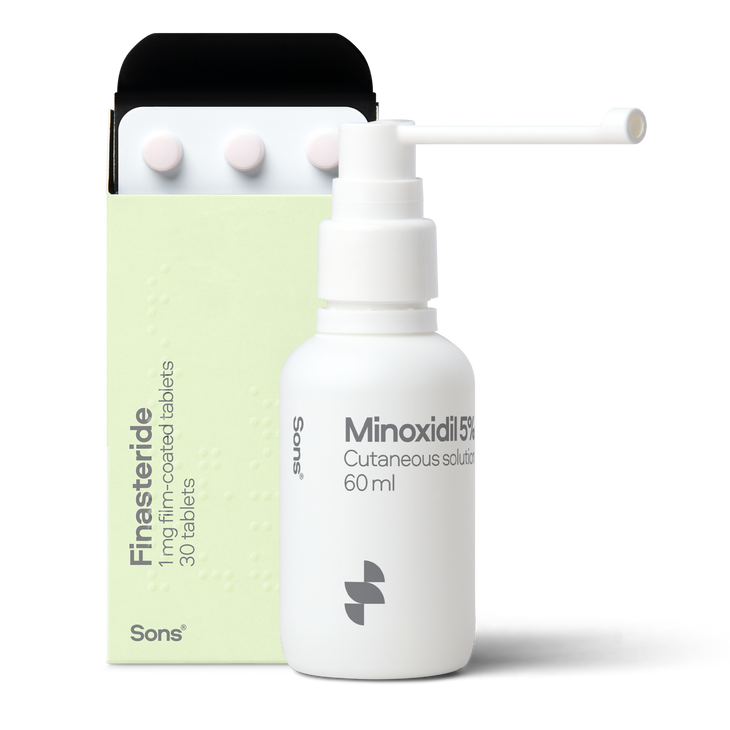
Dual Action - Tablet + Spray
| Pack size | Price |
|---|---|
| 3 months | £106.00 Out of stock |
| 6 months | £189.00 |
What are finasteride and minoxidil?
Finasteride and minoxidil are two hair loss treatments that can help in slowing, and for some, reversing hair loss in men with male pattern baldness.
Finasteride can only be obtained if you have a prescription, whereas you can buy minoxidil spray over-the-counter. As this bundle contains both treatments, you will require a prescription if you wish to use the finasteride tablet and minoxidil spray to treat your hair loss.
What’s the difference between finasteride and minoxidil?
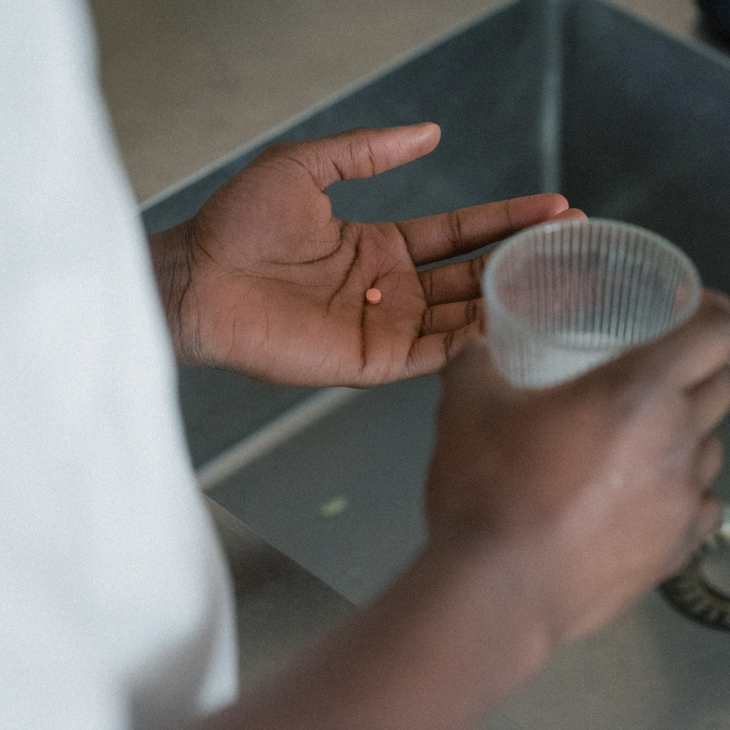
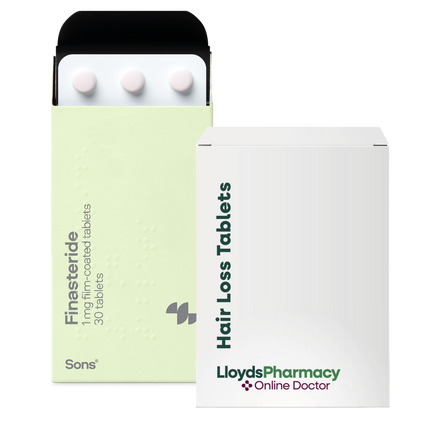
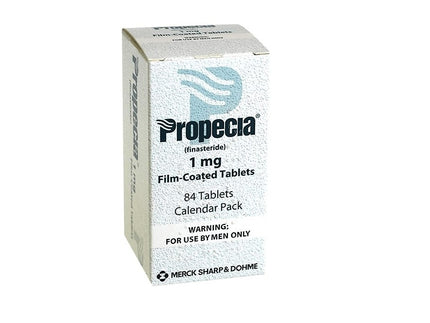
Finasteride (also known by its branded name, Propecia) is available as a tablet, which is taken daily to stop hair loss by blocking DHT. DHT is a hormone involved in male pattern hair loss. Finasteride lowers DHT levels in the scalp, helping to prevent further hair loss and, in some men, increase hair growth.
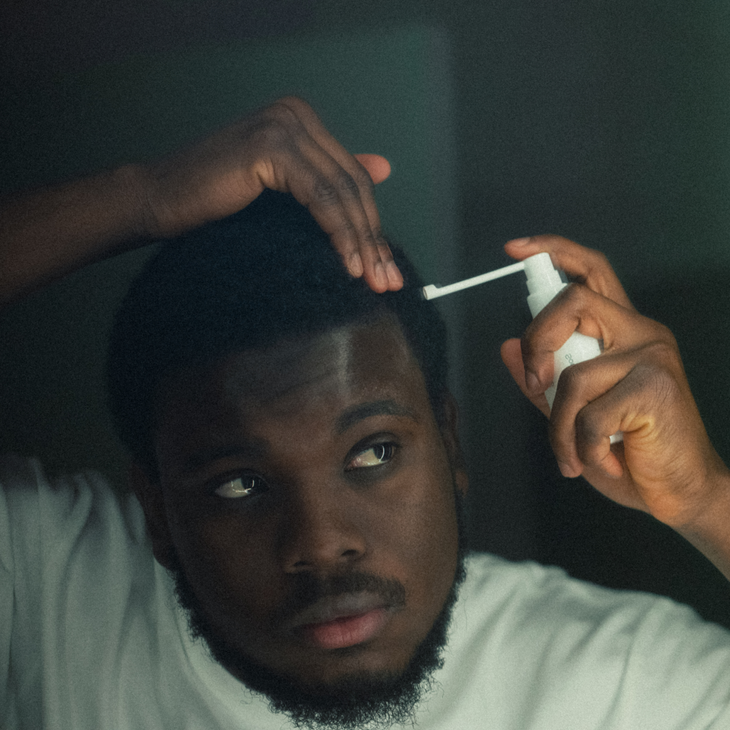
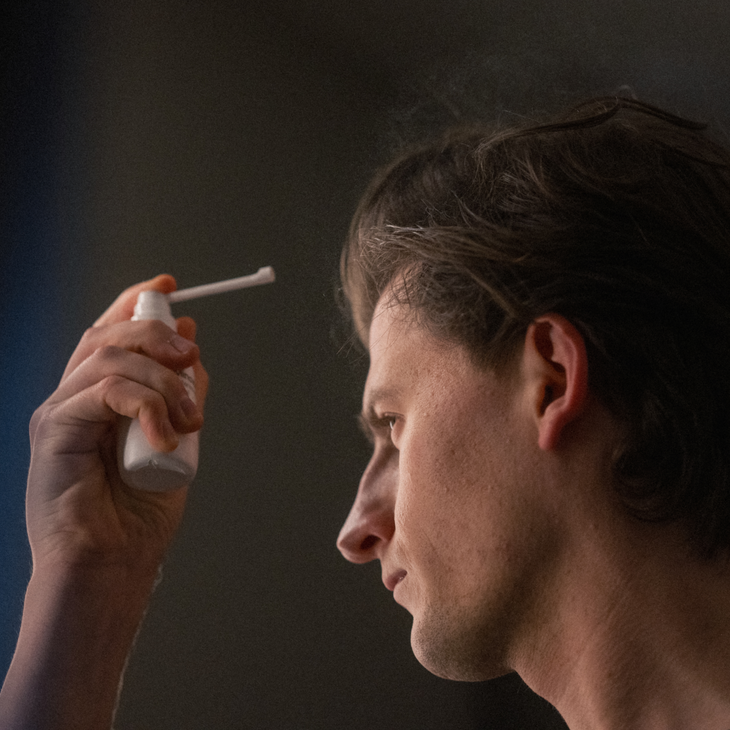
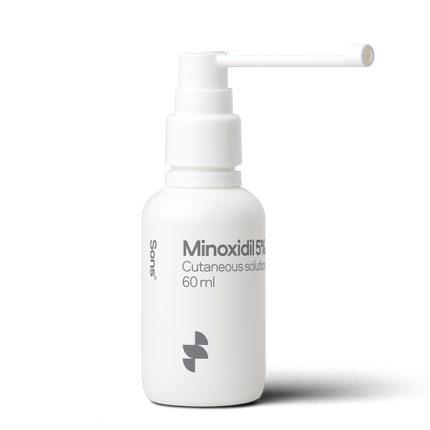
Minoxidil is supplied in this bundle as a topical spray applied to the scalp. The foam is applied to your head twice a day to help reverse hair loss. It can promote hair growth by improving blood flow to your hair follicles, which stimulates them into a ‘growth phase’.
How does finasteride work?
Finasteride works by:
-
Blocking DHT (a hormone which affects hair follicles and causes hair loss)
-
By reducing the effect of DHT, the hair follicles can return to a normal growth cycle
-
This slows (and in some cases can reverse hair loss)
How does minoxidil work?
Minoxidil works by:
-
Increasing blood supply to the hair follicles
-
The expanded blood supply increases the flow of nutrients and stimulates growth.
Is it safe to use finasteride and minoxidil at the same time?
Finasteride and topical minoxidil can be used together by some men. A clinician will assess whether both treatments are suitable for you.
No direct interaction between finasteride and topical minoxidil is identified in their product information, but each treatment has its own contraindications, cautions and possible side effects.
What to avoid when taking finasteride and minoxidil together
Please avoid the following when using minoxidil:
-
Shampooing your hair for up to four hours
-
Using any other skin products on the treatment area
-
Using minoxidil on a sunburned area
-
Shaving your scalp
-
Applying hair products to unwashed hair
-
Using minoxidil 24 hours before and after a hair treatment procedure
Tell the prescribing clinician about all medicines, supplements and herbal remedies you take. The NHS has reported that taking St John’s wort (a herbal remedy for depression) can stop finasteride from working as well as it is supposed to.
Tell the prescribing clinician about all medicines, scalp treatments, supplements and herbal remedies before starting treatment.
How do finasteride tablets and minoxidil spray work together for hair loss?
By taking finasteride and using minoxidil spray together, you’re treating your male pattern baldness in two different ways. Some clinical studies have reported greater improvements with combined treatment than with either treatment alone. Individual results vary.
How do you take each treatment?
Finasteride is a tablet which you take daily. The benefit is maintained only while treatment continues. Hair loss is likely to resume after treatment is stopped. For more information on use, read Finasteride’s patient information leaflet.
Minoxidil spray is applied to the scalp twice a day. It should be massaged lightly into the total affected area of the scalp (starting in the centre of the area being treated) and once it’s dry, you can simply style your hair as normal. Like with finasteride, as soon as you stop using the treatment, it will stop having an effect and hair loss will return. For more information, read the minoxidil patient information leaflet.
Who may not be suitable for hair loss treatment?
Minoxidil may not be suitable for men who:
-
Have sudden, patchy, or unexplained loss
-
Certain scalp conditions
-
Cardiovascular or blood-pressure concerns
-
Are over 65 years old
-
Use other scalp medications
Finasteride may not be suitable for men who:
-
Are going to have a blood test for prostate cancer called a PSA (prostate-specific antigen) – finasteride can affect the result of this test
The above points will be assessed during a consultation if treatment is requested.
How long should I take finasteride and minoxidil treatment?
-
When will my hair start to grow back?
This will differ depending on the patient. As finasteride and minoxidil are two separate treatments, you’ll see results from each at different times.
-
How long does finasteride take to work?
You can generally expect to start seeing results from finasteride after 3-6 months.
-
How long does minoxidil take to work?
Minoxidil can take up to 16 weeks to start showing hair growth (though some men have seen results in 8 weeks)
-
Will finasteride and minoxidil work faster if I increase the dosage?
Do not increase the amount of minoxidil or finasteride you are taking – this will have no effect on how quickly they work and will increase your risk of experiencing side effects.
-
How long should I keep using finasteride and minoxidil?
Neither finasteride nor minoxidil will offer instant results. It’s important to be patient and give any new hair time to grow. The minoxidil patient information leaflet says you may need to use treatment daily for at least 2 months before seeing new hair growth. For the effects of finasteride this may be 3 to 6 months.
If you have not noticed improvement after a year, speak to your clinician or pharmacist before continuing treatment.
Side effects of finasteride and minoxidil
-
Use of finasteride or minoxidil can result in side effects:
Finasteride
Minoxidil
Uncommon (may affect up to 1 in 100 people)
-
Unable to achieve or maintain an erection
-
Lower sexual desire
-
Decrease in semen released during sex
Frequency unknown
-
Breast swelling / tenderness
-
Testicle pain
-
Blood in semen
-
Heart palpitations
-
Persistent changes to sex drive and erections
-
Liver function changes
-
Anxiety and suicidal thoughts
Very common (may affect more than 1 in 10 people)
-
Headache
Common (may affect up to 1 in 10 people)
-
Itching or dermatitis
-
Unwanted non-scalp hair
Uncommon (may affect up to 1 in 100 people)
-
Nausea
Rare (may affect up to 1 in 1000 people)
-
Change in hair texture
Frequency unknown
-
Depression
-
Eye irritation
-
Vomiting
-
Scalp irritation or rash
-
Temporary hair loss
For more information on side effects, please consult the patient information leaflets for both finasteride and minoxidil spray.
There is currently no evidence to suggest that use of finasteride will increase the likelihood of patients suffering potential minoxidil side effects, and vice versa.
If you are experiencing side effects from using either finasteride or minoxidil, please talk to your GP. You can also report suspected side effects through the MHRA Yellow Card scheme.
Stop taking finasteride and seek advice if you experience:
-
Symptoms of an allergic reaction
-
Depression
-
Suicidal thoughts
Stop taking minoxidil and seek advice if you experience:
-
Symptoms of an allergic reaction
-
Swollen hands or feet
-
Persistent redness, rash or irritation of the scalp
-
Faintness or dizziness
-
Rapid or irregular heartbeat
-
Chest pain
-
Low blood pressure
-
Sudden unexplained weight gain
Call 999 if you need emergency help due to side effects. If the problem is urgent but not life threatening, call 111. Message through your account if you have any routine questions about treatment (you should receive a same-day response if you message before 4pm).
If you are experiencing any of the following symptoms please stop taking finasteride or minoxidil and talk to your GP immediately:
-
Allergic reaction symptoms (facial swelling, difficulty swallowing or breathing, hives)
-
Depression or suicidal thoughts
-
Changes in breast tissue (lumps, pain, enlargement)
-
Chest pain
-
Low blood pressure
-
Fast heart beat or palpitations
-
Faintness or dizziness
-
Sudden unexplained weight gain
-
Persistent local redness or rash
-
Change in hair colour or texture
-
Hair loss for longer than two weeks
-
Finasteride and mental health
-
Possible mental health side effects of finasteride:
MHRA guidance has highlighted that possible side effects of finasteride can include:
-
Depression
-
Urgent action for thoughts of self-harm
-
Suicidal ideation
-
Sexual dysfunction (which may contribute to mood disorders, though sexual dysfunction has also been reported without mood alterations)
Stop taking finasteride and contact a healthcare professional as soon as possible if you develop depression or thoughts of suicide.
Contact your clinician if you experience sexual dysfunction. In some patients, sexual side effects have continued after treatment was stopped.
Speak to your healthcare provider before starting finasteride to make sure it’s a suitable and safe treatment for you. You will be asked if you have a history of depression or suicidal ideation - you will be reviewed regularly for psychiatric and/or sexual side effects. It is important to read the patient information leaflet before starting treatment.
-
New patient offer:
Get 20% off on your first hair loss consultation with code WELCOME20. From £84.80. Terms and conditions apply.
How our hair loss service works

Complete our simple, confidential online consultation
5 mins

One of our clinicians confirms your suitability and notifies you by email
About 30 mins (Mon-Sun 9am-5pm)

Dual action tablet and spray bundle FAQs
-
Can this bundle be used for all types of hair loss?
No, this bundle is for people who are experiencing male pattern baldness. This is a type of hair loss that’s hereditary, and for lots of men is simply a natural part of ageing.
-
Is this bundle suitable for women with hair loss?
Finasteride is not suitable for women.
-
Does finasteride or minoxidil cause hair shedding?
Some men experience temporary increased hair shedding during the first 1 to 2 months of treatment.
This can be a normal and temporary part of the treatment process. As the hair growth cycle responds to treatment, older hairs may be shed before new hairs enter the growth phase. This process, sometimes called "shedding", occurs as hair follicles synchronise their growth cycles.
It is important to continue treatment as prescribed, as stopping too early may reduce the chance of seeing longer-term benefits. Hair growth is gradual and it can take several months before improvements become noticeable.
If shedding is persistent, severe, patchy or you have concerns about your symptoms, speak to your clinician for advice.
Other hair loss treatments

Find out more about hair loss

Why do I have a receding hairline?

What is telogen effluvium?

Do hats cause hair loss?

Gym supplements and hair loss

Does diet affect hair loss?

Finasteride prescription: What is it and where to get it?
Delivery and collection information
-
Standard delivery (Free)
- Delivered within 5-7 working days.
-
Next-day delivery (£4.95)
- Orders approved before 5pm Monday-Friday will arrive within 1-2 working days.
- Orders approved between 5pm Friday and 12pm Sunday will usually arrive on Monday or Tuesday.
-
Standard ParcelShop collection (Free)
- Collect from 7000+ convenient ParcelShops in 2-3 working days.
-
Next day ParcelShop collection (£2.95)
- Collect next day from 7000+ convenient ParcelShop locations, if approved before 5pm Monday-Friday.
- Saturday and Sunday orders, collect Monday if approved before 12pm Sunday, or Tuesday if ordered after 12pm.
Enter your address, postcode or use your location to find your nearest pharmacy.


